The smell of rain

In the vast open country of New Mexico you can watch the rain coming from miles and miles away. The clouds roil up from the Southwest, a mass of slate gray stretching out over the sky. A really dark cloud brings hail and driving rain, which will make the arroyos run. Lightning flashes in the distant dark mass; I count the seconds until the thunder booms.

One chimpanzee, two chimpanzee, three chimpanzee…

Three miles away.

Then it happens. The wind picks up, and the smell of coming rain envelops me. I go outside and drink it in viscerally. It doesn’t exist like this anywhere else on Earth. What does it smell like? Rain. Rain in New Mexico. Continue reading →

It’s all about philosophy

The Thinker, by Auguste Rodin

A strange post appeared this morning on Facebook from my friend Matt:

Interesting snippet from the Grauniad:

“Proof that the road to enlightenment can begin with the most trivial subject arrived this month via Wikipedia. Start at any Wikipedia page, then click the first link (ignoring any that are italicised or nestled in brackets), then repeat. For more than 93% of articles, you will end up at philosophy.”

My first comment was “and what, pray tell, is the Grauniad?” which I shouldn’t have made because all I had to do was go to Google, which yielded a Wikipedia link to the British newspaper the Guardian and this snippet of information:

The nickname The Grauniad for the paper originated with the satirical magazine Private Eye….

Well this is fortuitous, I think to myself. Here I am on Wikipedia! Let’s test the theory. I start clicking. Newspaper-publication-content-information-sequence-mathematics-quantity-property-Modern Philosophy. Wow!

I tried it with a few other things, ignoring the first link if it was either italicized or in parentheses.

Land mine? Mining, siege, military, use of force, conflict resolution, controversy, opinion, subjectivity, subject, philosophy. Wow!

Pomegranate? Fruit-plant-living-object-physics-natural _science-science-knowledge-fact-information-sequence-mathematics-quantity-property-modern philosophy.

River? Watercourse-water-chemical_substance-chemistry-science-knowledge-fact-information-sequence-mathematics-quantity-property-modern philosophy.

Zombie? Animated_corpse-revenant-fantasy-genre-literature-art-symbol-information… here we go again. I already know that information leads to Modern Philosophy.

This is weird. So far I’m 5 for 5, if you permit “Modern Philosophy” and “Philosophy” to be equal.

I wonder how they got 93%. I’m hoping some geek somewhere wrote a program to test it and it doesn’t turn out to be one of those “urban legends.” Hey, let’s test Urban Legend! Folklore-music-art-symbol-information…

Dave will probably be able to do this. I’ll check and get back to you.

Being a purist, I want purity. If you click on the first links starting from the “Philosophy” page, you come back to the page. If you click on the first links from “Modern Philosophy” you end up going back and forth between “High context culture” and “Low context culture.” If you cheat a little and ignore the first link on the “Modern Philosophy” page, which is “Western Europe,” then you end up on the “Philosophy” page. I think someone should edit that for purity’s sake.

Wikipedia is crowd-sourced, so this can’t be intentional. It would be too hard to control.

From the “Philosophy” page:

The word “philosophy” comes from the Greek φιλοσοφία (philosophia), which literally means “love of wisdom”

I love it, indeed. Especially since I majored in Philosophy in college and have been wondering what to do with all that knowledge (fact-information- sequence-mathematics-quantity-property-modern philosophy) ever since. I particularly like the fact that “information” is not the bottom line. We need wisdom to handle it.

“That’s just random,” says my son Luc when I tell him what I’m blogging about.

I’m not so sure.


Inspiration

“There’s someone in my head, but it’s not me.” – Pink Floyd

Where do ideas come from? How many of us wake up in the morning and say, Gee, I think I’m gonna to have myself a great idea today!

Not me.

In general, the harder I try to think up something original, the slower my brain goes until it ultimately screeches to a stop and I have to go play a game of Scramble or eat jelly bellies to get it going again. Continue reading →

Mindset Mapping

I keep returning to the idea of stereotypes. Or perhaps the idea keeps finding me.
As the poet John Donne so aptly put it:

No man is an island; every man
is a piece of the continent, a part of the main;

That’s the human dilemma, isn’t it? We’re alone, yet not alone. We each have our own unique perspective, the way things look from the island of moi. And yet we want so badly to belong, to make sense of all those other islands whose views are so unlike our own.

On that geographical note, I thought I’d share a series of maps designed by Bulgarian-born London-based “graphic designer slash illustrator” Yanko Tsvetkov. He has taken the idea of stereotyping up a notch, with maps that stereotype how different people stereotype each other. The whole idea is wildly politically incorrect, yet …  You’ll see what I mean. Continue reading →

Space Invaders

Those who visit this space frequently know I have a thing about weeds (see my Weed Manifestos I and II). I like control and order, so these uninvited invaders offend my sense of decorum. I’m also lazy, which means I don’t want to do the actual physical labor involved in removing them. In short, I’m torn. Recently I lightened up a bit and decided to let them have their place in my garden. At least until Oscar comes and digs them all up.

Today, a whole bunch of things came together that made me think again about weeds – and more generally about what constitutes an “undesirable.” In a press release from the University of Arizona, I read this:

The recent field of invasion biology faces a new challenge as 19 eminent ecologists issue a call to “end the bias against non-native species” in the journal Nature.

The group is questioning the automatic (and politically correct) assumption that native species are inherently more valuable and “good” than non-native ones. It turns out that plants and critters brought in by accident in luggage or on purpose to eradicate a pest sometimes thrive so well in their new habitats that they crowd out the oldies. This causes consternation and a call to wipe out the newcomers, to put back the clock, to return nature to its “pristine” state. But as endless examples have shown, once these space invaders have gotten established, there is no going back. Just look at the cane toads in Australia, the zebra mussels in the Great Lakes and the Kudzu vine or Tamarisk in the Eastern US. Like it or not, they’re here to stay. 

Reading that paragraph over, it struck me that this isn’t just a problem with plants and animals. Here in Switzerland many people exhibit exactly this same bias against other, “invading” human populations. They don’t look right, smell right, eat the right things. They’re crowding us out of our jobs! They don’t share our ideas about what’s important! I think it’s actually a very human tendency – resistance to change. We often assume that how things were is automatically superior to how things are, particularly when newcomers are involved. 

But it’s certainly a selective resistance. As the press release mentioned, native species often do just as much, if not more damage than invaders. Nobody would mind at all if the bark beetles died out, gobbled up by, say, ladybugs from Outer Mongolia. I doubt anyone would fuss if the Anopheles Mosquito kicked up its heels and disappeared off the face of the Earth. Our outrage seems to be proportionally related to the cuteness of the local species and the ickiness of the invading one. Even our word choice screams bias — we employ the adjectives “invasive” and “non-native” much more frequently than “opportunistic” or “exotic” (this last is often used to refer to non-native plants sold in nurseries, however, which can be classified as attractive and thus are okay). 

Photo: katanski
In a remarkable coincidence, I came across an article in the New York Times about a cute little hamster living in the Alsace region of France that’s having a hard time surviving because the farmers have stopped planting alfalfa and are putting in corn or selling off their land for housing developments. These guys wake up after a winter of hibernation and there’s nothing to eat! There are only about 800 of them left in Alsace, although they’re apparently thriving in Eastern Europe and in no danger of extinction. The EU is planning to slap the French with up to   $25 million in fines if they don’t take measures to get the numbers up. 

Meanwhile, in Switzerland, the two wolves that are permitted to live in the Alps are under close scrutiny. They’d better behave themselves, because if they so much as show a whisker near a herd of sheep the hue and cry goes up and the guns come out. Livelihoods are at stake! This native species was eradicated ages ago long before anyone had written a thesis on “invasive species,” and nobody really wants them back, because the newcomers (people, sheep and cattle) aren’t interested in living in a balanced predator-prey ecosystem. The only predator here is the cheesemaker, the butcher and, eventually, the bank. (That’s Switzerland for you!) I guess their cuteness factor just doesn’t make the cut.

All this underscores a problem I’ve had with conservation biology (and now the new field, “Invasion Biology”) for a long time — that we’ve made the mistake of taking ourselves out of the equation. This is both mathematically and philosophically irresponsible. We don’t exist in parallel to nature, where one kind of reasoning applies to us, and another to the rest of the natural world. Our species is just another species, deeply interwoven with all the others, altering things irreversibly all the time, just like they are. 

I read today that every human parent passes 30 mutations on to his/her children. Like the rest of the natural world, we are in a state of constant adaptation. Nothing stays the same! We’re not going to stop traveling, so invaders will continue to invade. It doesn’t look like we’re going to stop heating up the planet, either, so habitats are going to change, making room for even more invaders. We’re invading each other, they’re invading us, we’re invading  them — it’s a war zone out there! So once again, I say, carpe diem, take a good look at what’s around you and savor it right now. It might be covered with Kudzu next week.

Come to think of it, isn’t there an argument that life on Earth originated from stuff that hitched a ride on a meteorite? Maybe the whole shebang we call “life” is one big massive accidental invasion. God is up there saying “now look what happened, I had a perfectly decent planet and now it’s crawling with vermin…”

Pop that bubble

Eli Pariser did a Ted talk recently about how Google and Facebook and so on track just about everything you do online and feed this data into algorithms that personalize the way you experience the Internet. What you see and who you interact with are invisibly decided for you based on your past preferences, and you probably are not even aware of it. Or if you are aware of it, you’re also aware that there’s not much you can do about it.

See, you’re surfing in a “filter bubble” surrounded by people just like you and things you’ve already expressed an interest in, and you’re increasingly cut off from differing viewpoints, unbiased information and new ideas. Here’s a link to the video: it’s worth a watch, if you have nine minutes. Continue reading →

It was here all along

Aside from a tornado, a volcanic eruption, the cataclysmic failure of both Johns Hopkins and Cornell to advance to the semifinals of the NCAA lacrosse championships and the 7-0 defeat my tennis team suffered to a team from Nyon, Saturday was an average day. Slightly better than average, for me; not only was I spared the humiliation of being trounced by a ponytail-swinging teenage tennis phenom (I sat this match out), but the headache I had been carrying around with me since about 3 am Tuesday also rapturously lifted. I’d actually started to wonder if I was being punished somehow for my skeptical attitude in Monday’s “Time’s Up” post. (Tip: don’t do a Google search using both “hypertension” and “headache”. Trust me, it won’t help.) For about five minutes on Sunday morning I felt sorry for Harold Camping, whose wife reported that he was “bewildered.” That is, until I read this: 

In 2009, [his] nonprofit reported in tax filings that it received USD 18.3 million in donations, and had assets of more than USD 104 million, including USD 34 million in stocks or other publicly traded securities.

Then I started feeling sorry for all the poor suckers believers who emptied their pockets to put up billboards in an attempt to warn the rest of us. 


In typical US fashion, journalists made the non-event into a “Media Moment” by digging out “experts” to lend weight and importance to this epic Fail. Did you know that End Time Studies is an academic discipline? It’s called escatology. Imagine introducing yourself at a cocktail party:


“What do you do? I’m an escatologist. … What? No, I don’t collect animal poop, I’m looking into Armageddon.” 


Well, back to the trenches. For Camping’s faithful, it will no doubt be tough to carry on bereft of all possessions, cash and credibility. But wasn’t that what Jesus demanded of his followers in the first place? Chuck it all and join me on a road trip? Maybe this is that opportunity. Maybe this is, in fact, their Rapture! Wake up folks! Stop scanning the heavens! It’s just an atmosphere, and a rather thin one, at that.


The rest of us (myself included) should bring our supercilious told-you-so’ing to a stop and go back the business of thinking about and doing more worthy things. I promise after this post I will never mention the Rapture again.


In fact, I’ve always felt that worrying about what happens after you die is a monumental waste of time. When the time comes, it comes. We’ll find out then. What I DO know is that I’m sharing the planet with many other fascinating forms of life and intelligence. Opportunity is everywhere. Why waste that time worrying? Why obsess about earning eternal life via the application of magical behavioral formulas? If I don’t even want to embrace all I’ve got here and now, why on earth would I want to extend it to infinity? It’s a logical fallacy. Even supposing that God existed, don’t you think she’d be disappointed that so many of us (and particularly the most rigid among us…) exhibit such a stunning lack of curiosity? She’d be thinking, “Oh, why did I go to all that bother with the outsized brains?”


Here we are. Right now. Welcome to the Rapture!

Typical

Well, only one more day to go. Over here, several time zones away from where Harold Camping is campaigning, no one has said a thing about the Rapture. I’m sure if the local press got wind of it, they’d love it, but the news is full of Strauss-Kahn’s arrest and the odd Schadenfreude of watching a French politician go down in flames. Continue reading →

Time’s Up

I’ve wrapped up the English translation of another issue of Reflex, finished editing a scientific paper for a professor here, translated various bits and pieces for various websites there, and (drum roll, please) written the Deepwater Horizon article! Yes, I finally did it. I admitted to the author that I’d lost my notes and asked him for a copy of the journal article, and now the thing is done. I’d share its very interesting conclusions with you now, but I can’t because the article hasn’t been published yet. I promise I’ll tell you the latest bad news on the oil spill once the embargo has lifted.

For the first time in two months, a Monday morning stretches before me without a single deadline in sight. Freedom!

Imagine my shock when my Research Assistant (yes, I’ve given Dave a promotion!) unleashed this on me:

The world is due to end on Thursday. I should do my post then. Continue reading →

Weed manifesto, part II

Since writing my Weed manifesto last month, I’ve been thinking a lot about my aversion to weeds. Every now and then, as I yank one up by the roots, I even feel a little twinge. Last week I had coffee at a friend’s house – a friend who has a perfect garden. I swear to you there was not a weed in sight. Neat mounded rows of lettuce, protected from the birds by clever chicken-wire covers, a stunning bed of irises, the trunk of the cherry tree neatly wrapped in anti-ant tape, pine boughs carefully placed under the blueberries. Little strawberry plants were artfully arranged under the apple tree. Aphid-free roses, their healthy leaves shining a deep, rich green, were setting the first buds of the season.


“She has such a great garden,” I said wisfully to my neighbor in the car afterwards. “Did you see any weeds? I didn’t.”

“Yeah, and her husband is also Swiss-German,” my friend said. “That’s her garden. Yours is yours.”

Wow. You mean there is no universal horticultural reference point? No ideal garden up there sitting next to the other Platonic forms like truth, beauty and justice? 

“You should stop stressing so much about your garden. It’s great just the way it is! Just get Oscar to come and deal with the weeds if you don’t want to. Life is short.”

This is my neighbor who can go to the nursery and come back with the perfect plant, the one whose garden is a lovely riot of color with very little apparent effort. But I pulled my nose out of my navel and grudgingly admitted that she had a point. I need less stress in my life, not more. Why should my garden be a source of stress? That’s just stupid. My life (and my garden and my garden-impaired non-Swiss-German husband) is mine, and I should embrace it as it is. 

As if to prove the point, guess who was in her driveway when we arrived? 

Oscar. 

Now, Oscar is a character. He’s a native of Portugal who is employed as a handyman/gardener/concierge for a few big apartment buildings in our village. On the side, he tackles various private gardens. He works for a whole season without asking for a cent, and then bills you sometime in the middle of the winter for the whole shebang. It’s all meticulously itemized. I first heard about him from a Swedish woman whose lawn he rescued from the brink of death. I hired him to mow our lawn in the years before I would let Brendan do it (I was scared he’d run over his toes). He still prunes our trees because I am convinced that if I take shears to them, I will kill them all. I told my neighbor about him, and she referred him to someone else. Oscar has an unflappable work ethic and an accent so thick I can only understand about a third of the words that come out of his mouth. I think he’s speaking French — but the syntax and grammar are not entirely recognizable. I usually nod my head a lot when he talks and say repeatedly, “You’re the expert, Oscar, just do what you think needs doing.”

Oscar launched into an unintelligible diatribe about the new double-bladed lawn mower he had invested in and the flies along the lake, the relationship between which I failed to grasp completely. I managed to communicate that I’d like him to come sometime soon and deal with the majority of my weeds for me. 

There. It was that simple. 

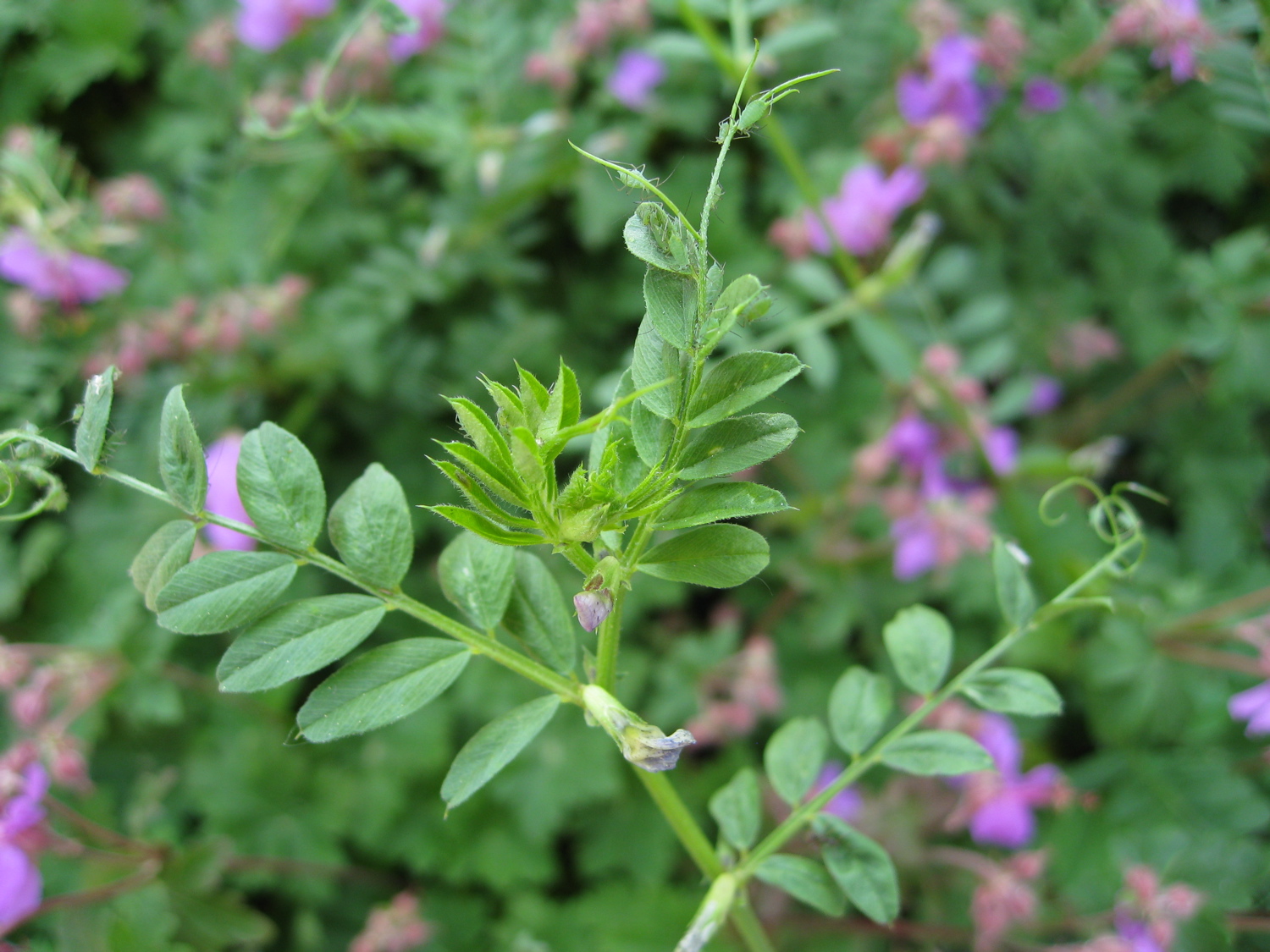
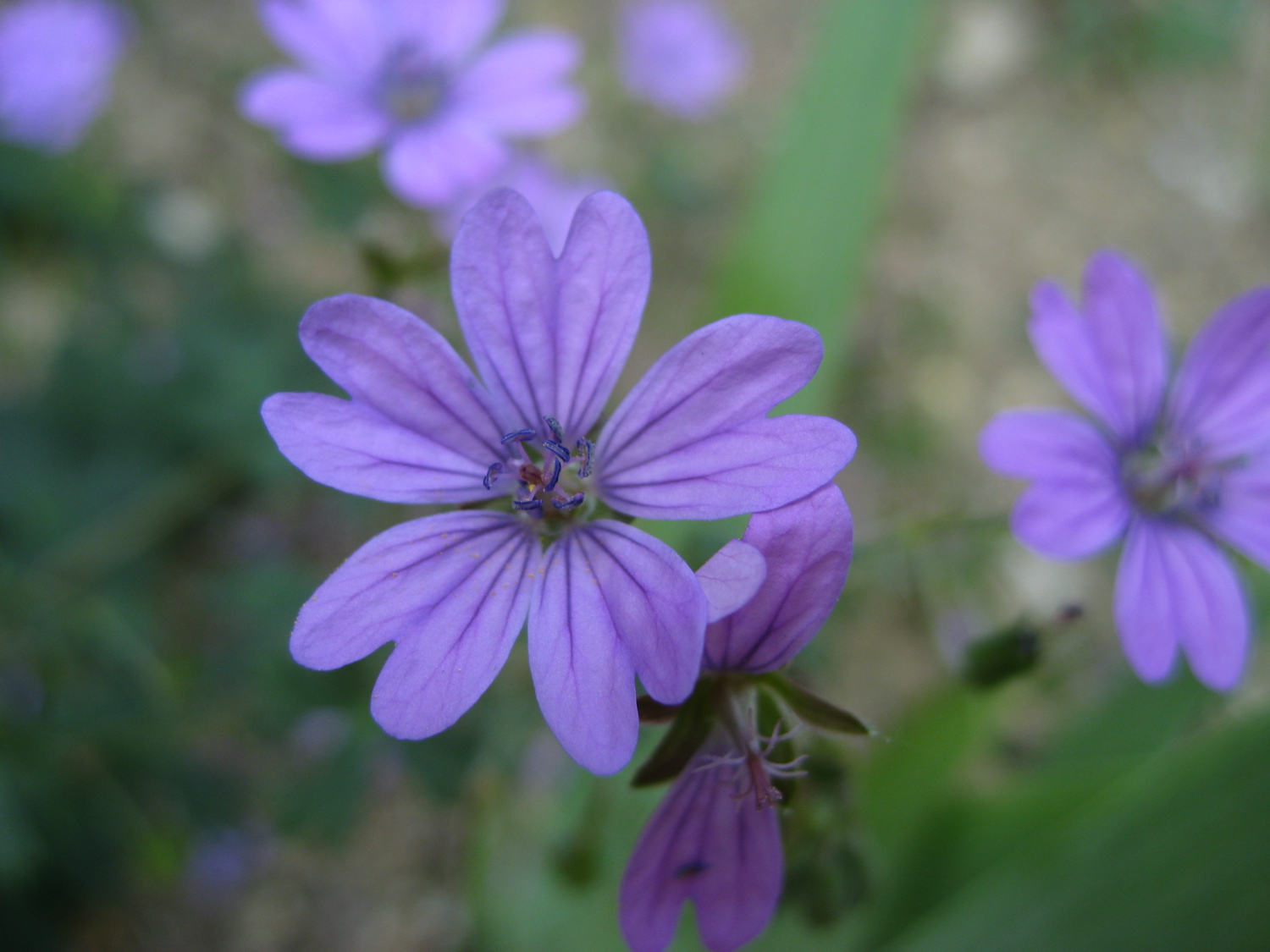
He hasn’t showed yet, but I have totally let go of my weed stress. I’ve actually even started going in the opposite direction. Along with everything else in the garden, the weeds are blooming now. Some of them are really quite beautiful. What did they ever do to me, other than challenge my need for control? I decided to make room for some of them, to let a little chaos into my garden. The pictures in this post are all of weeds. In the name of diversity, openness, and yes, to claim my own garden as my own — here they are in all their glory.


This is the one that is so hard to pull out. If you squeeze the flower, it goes ‘pop’.